Supervisor Activities
Creating New Assignments
There are four ways to create new assignments within the Supervisor App:
- From the Route Details panel by selecting ‘Assign Resources’
- From the Resource Details panel by selecting ‘Add Task’
- From the Map Monitoring view by searching for an address (Address Specific Assignment)
- From the Map Monitoring view by tapping a location on the map (Staging Location Assignment)
Assigning Resource to a Route
A Supervisor can assign a new resource to a route by following the steps below:
- From the ‘Route Details’ panel, tap ‘Assign Resources’ as shown below.
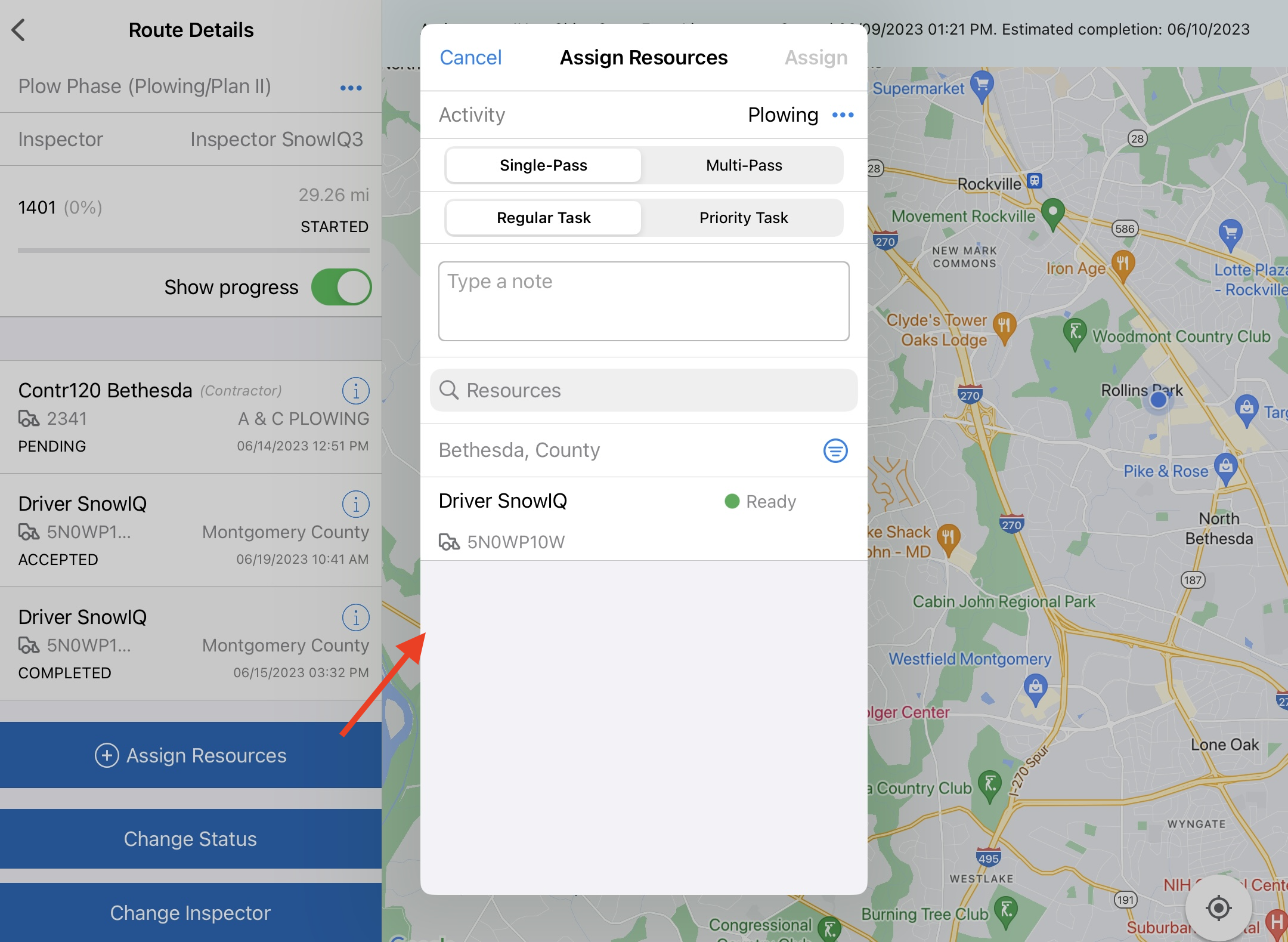
- In the ‘Assign Resource’ dialogue, do the following:
- Select type of Activity
- Specify whether the assignment is Single-Pass or Multi-Pass using the Multi-Pass toggle control
- Specify whether it is a priority task using the Priority task toggle control
- Enter a note to the Resource
- Select a Resource by either searching for a Driver name in the search bar, or by selecting an available resource from the list which can be filtered by Depot (defaulted to the Supervisor’s Depot), and/or Resource Type (County or Contractor)
- Select ‘Assign’
- This will add the assignment to the Route Details with the name of the Driver, along with an Assignment status of ‘Pending’ to indicate that the Assignment has been sent to the Driver but not yet accepted. It also adds the Assignment to the list of Future Assignments for the Resource, as described and shown in the section below. This action will also be sent to the Driver App to prompt the Driver to accept the Assignment.
Adding Task to a Resource
A Supervisor can add a new task to a Resource by doing the following:
- From the Resource Details panel, tap ‘Add Task’
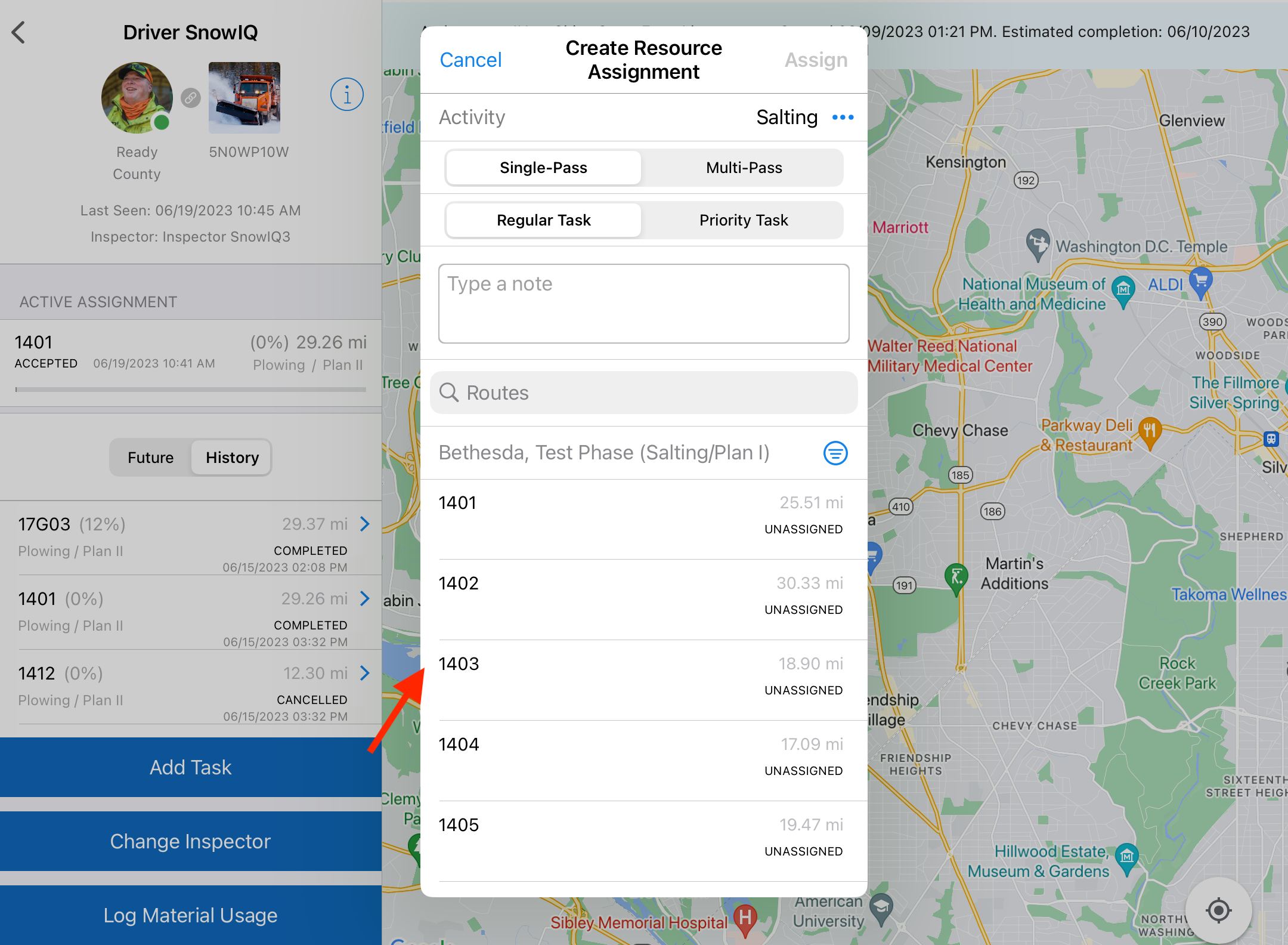
- In the ‘Create Resource Assignment’ dialogue, complete the following:
- Select type of Activity
- Specify whether the assignment is Single-Pass or Multi-Pass using the Multi-Pass toggle control
- Specify whether it is a priority task using the Priority task toggle control. If selected, the assignment will be placed at the top of the queue of the Future list of assignments for the Driver.
- Enter a note to the Driver
- Select the route by either searching for a route number or by selecting an available route from the routes available based on the selected Depot filter Depot (which defaults to the Supervisor’s Depot)
-
Select ‘Assign’
- This will add the assignment to the Future list for the Driver with a status of ‘Pending’. This indicates that the assignment has been sent to the Driver but not yet accepted. The system will prompt the Driver in the Driver App (DA) to accept the Assignment.
Creating Address Specific Assignment
A Supervisor can create an Assignment related to a specific address by doing the following:
- From the Map Monitoring view (either tab: Routes, Resources, or Tickets), tap the magnifying glass or search bar and enter the address for the assignment
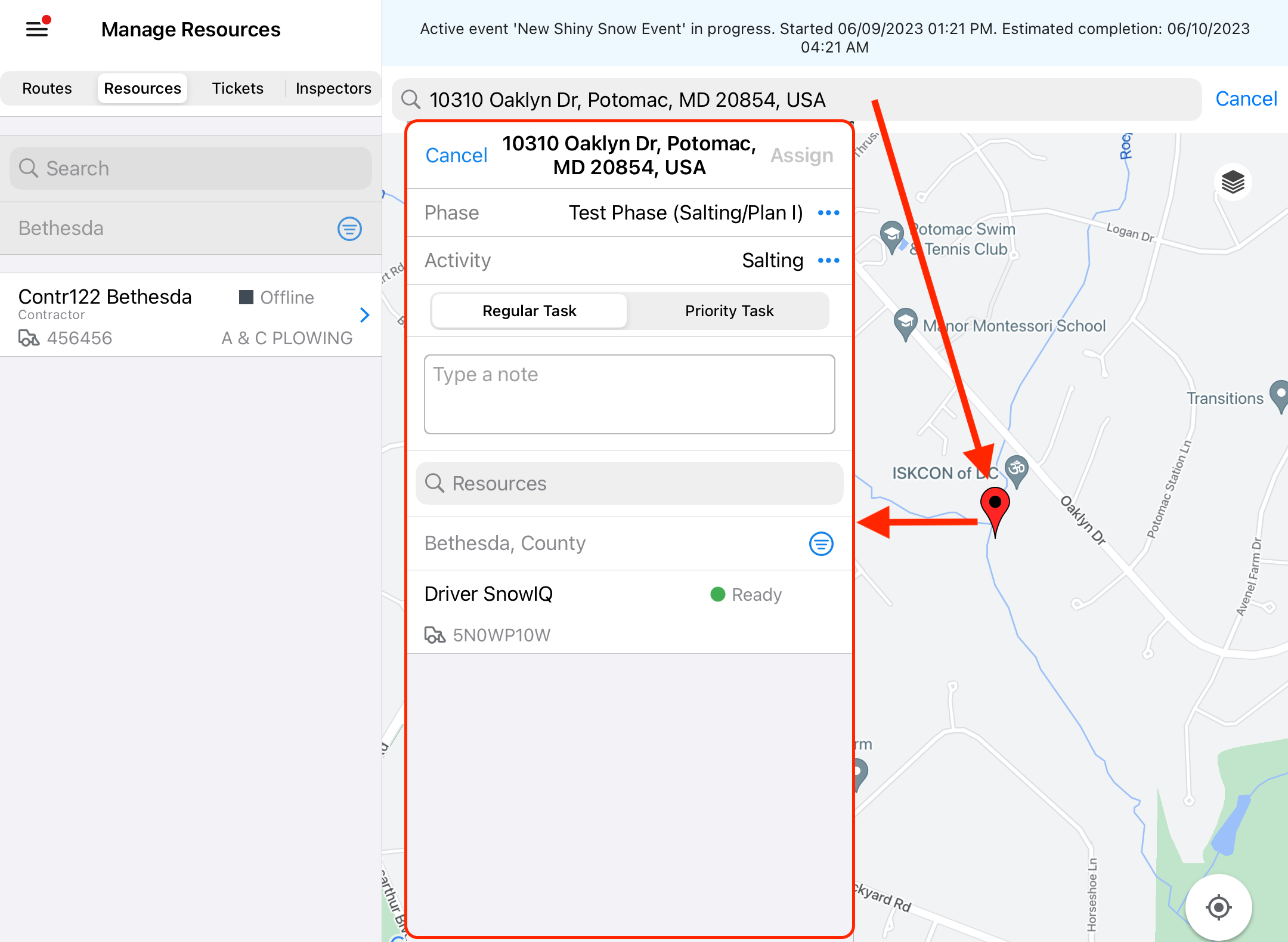
- The system will display a location marker on the map
- Tap the marker and complete the address specific assignment prompt, as shown below
- Select type of Activity
- Specify whether it is a priority task using the Priority task toggle control. If selected, the assignment will be placed at the top of the queue of the Future list of assignments for the resource.
- Enter a note to the Resource
- Select a Resource by either searching for a Driver name in the search bar, or by selecting an available resource from the list which can be filtered by Depot (defaulted to the Supervisor’s Depot), and/or Resource Type (County or Contractor)
-
Tap ‘Assign’
- This will add the assignment to the selected Resource’s Future list with a status of ‘Pending’, and the system will prompt the Driver in the Driver App (DA) to accept the Assignment.
Creating Staging Location Assignment
A Staging Location assignment sends one or more Drivers to a specific location on the map, where they wait, ready to start work. It is typically used before the active phase of an event begins (usually during the Monitoring phase), so that resources are already in position when plowing or salting starts.
A Staging Location assignment works like an Address Specific Assignment, but the location is selected by tapping on the map instead of searching for an address. This is useful when the staging location does not have a precise street address (for example, a parking lot, a yard, or a point along a road).
To create a Staging Location assignment:
- From the Map Monitoring view (either tab: Routes, Resources, or Tickets), tap the location on the map where the Drivers should be staged
- Select the option to create a staging location assignment
- Complete the assignment prompt, which is similar to the address specific assignment prompt:
- Select type of Activity
- Specify whether it is a priority task using the Priority task toggle control
- Enter a note to the Resource(s), for example, instructions on where exactly to park or wait
- Select one or more Resources by either searching for a Driver name in the search bar, or by selecting available resources from the list which can be filtered by Depot (defaulted to the Supervisor’s Depot), and/or Resource Type (County or Contractor)
- Tap ‘Assign’
The assignment is added to the Future list of each selected Resource with a status of ‘Pending’, and the system prompts each Driver in the Driver App (DA) to accept the Assignment. Drivers can then use the Navigate button in the Driver App to get directions to the staging location.
Completing Assignments for Multi-Passes
Some routes need more than one pass to be fully cleared. For these, create the assignment with the Multi-Pass toggle switched On. When a Driver finishes a pass on a multi-pass route, the route is not closed automatically. Instead, it waits for someone to decide whether another pass is needed.
Who Decides on Another Pass
The decision maker gets the ‘Pass Completion Notice’ prompt in the Supervisor App:
- If the route has an assigned Inspector, the Inspector receives the prompt and makes the decision. An Inspector who created an assignment on the route also receives the prompt.
- If the route has no Inspector, the Supervisor of the route’s depot receives the prompt and makes the decision.
If the assignment was created by a Supervisor, that Supervisor also gets a ‘Driver Completed Assignment’ notification.
Decisions are made in the Supervisor App only. The SOC shows the route’s status for monitoring, but you cannot request another pass or complete the route from there.
When a Driver Completes a Pass
When a Driver completes a pass, the route status changes to ‘Completed Pending’, and all Drivers on the route are put on hold until a decision is made.
The decision maker then sees the ‘Pass Completion Notice’ prompt with the route details, the number of passes completed so far, and the Drivers on the route. The prompt can take up to a minute to appear. If you close it without choosing an option, it comes back until you make a decision.
Select one of the following:
- Another Pass: the route still needs work. The Drivers are notified and continue working the route.
- Complete: the route is done. The route status changes to ‘Completed’, and the Drivers move on to their next assignment or become ‘Ready’.
After the route is completed, it can be inspected.
Note: Single-pass routes do not need a decision. The route is completed as soon as the last active Driver on it completes their assignment.
Canceling Assignments
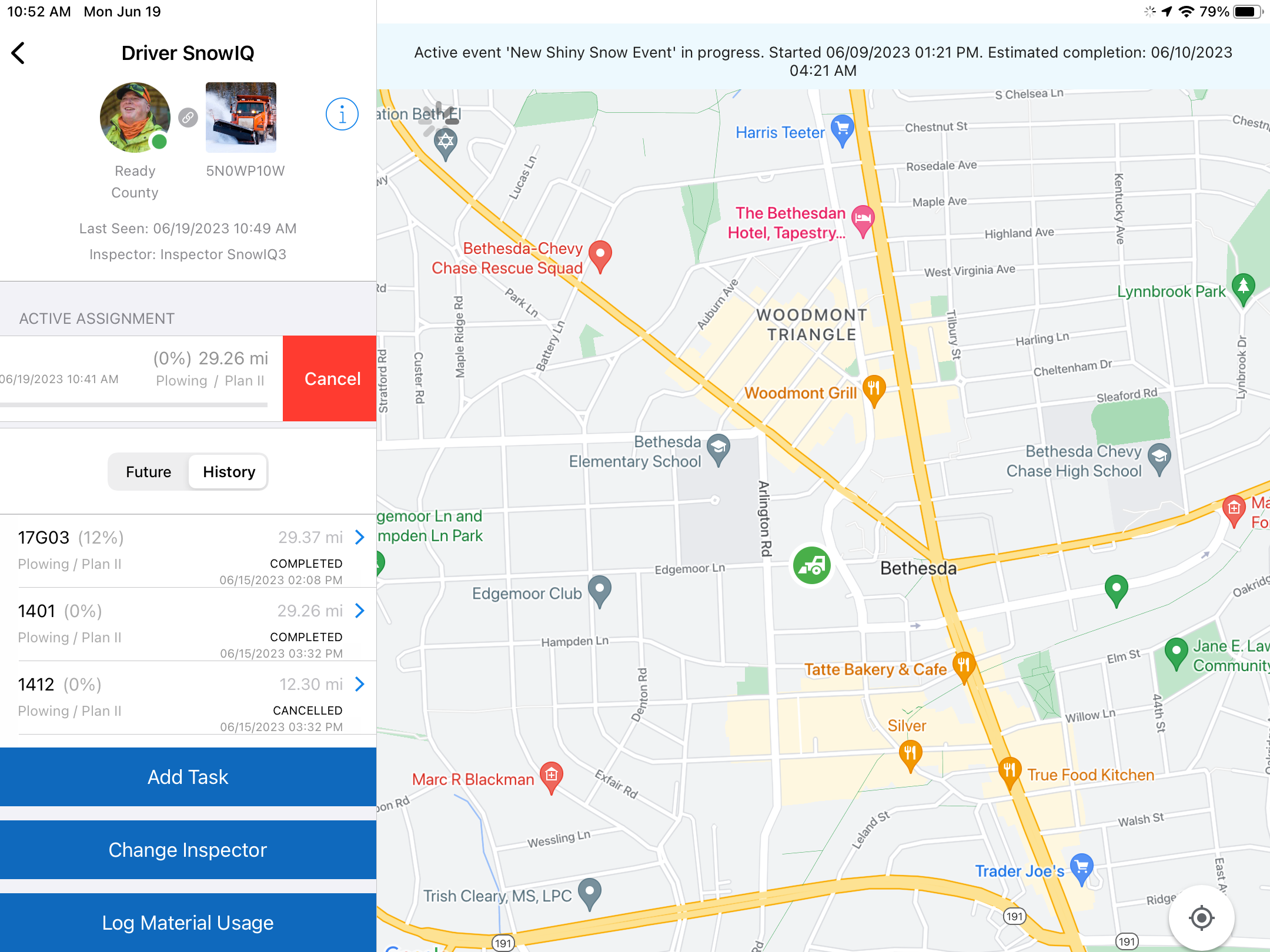
Supervisors can cancel assignments by doing the following:
- Select the Resource from the Manage Resource menu
- Select the Resource filter
- Select the Resource for the assignment
- Swipe the Assignment left
- When prompted to confirm the cancellation, select ‘Yes’
Routes
Inspecting Routes
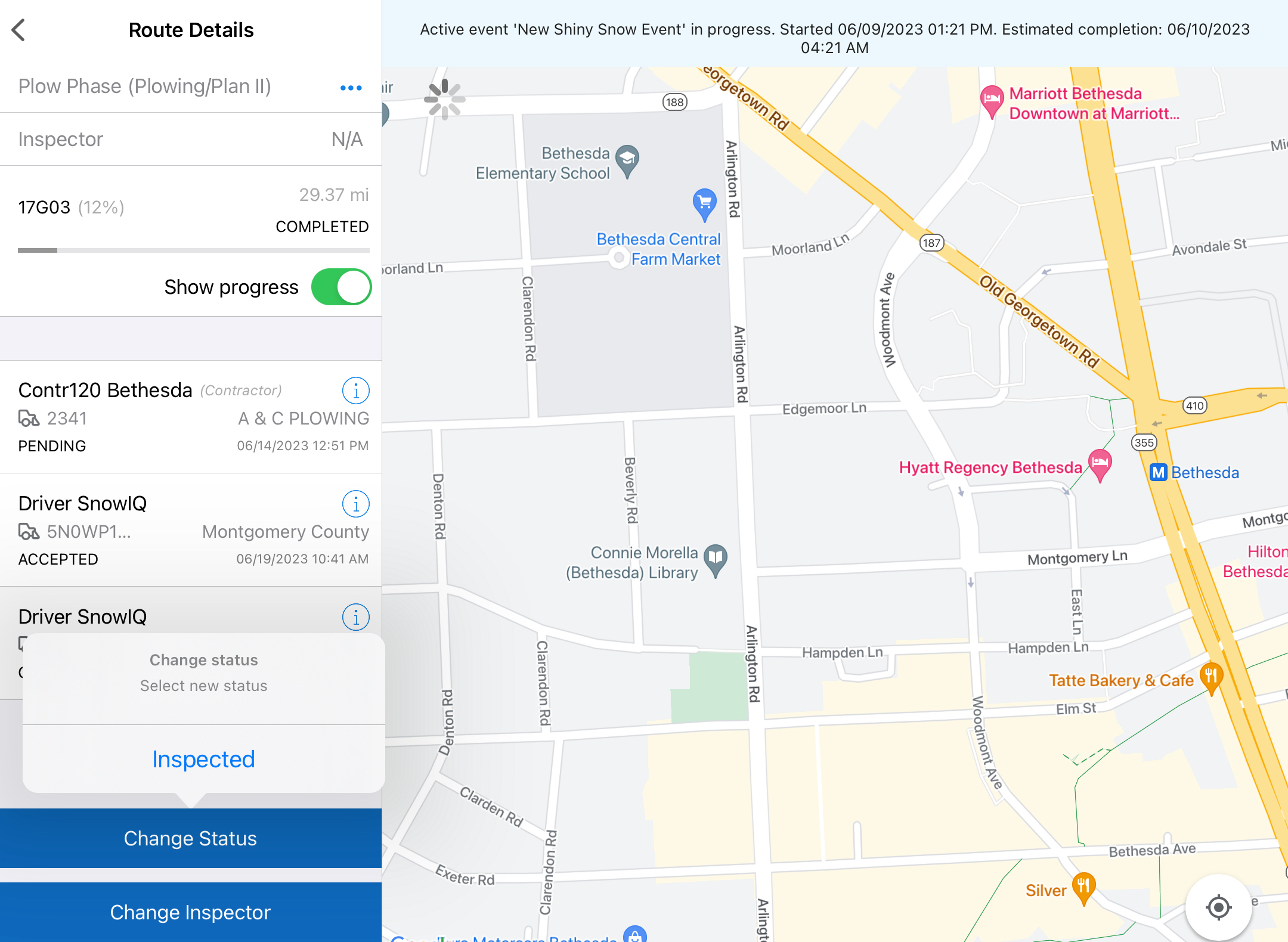
Once a Route has all its assignments completed, a Supervisor or Inspector needs to change the status of that route to ‘Inspected’ to verify that the route is finished. To do this, navigate to the Route Details panel and select ‘Change Status’, and then select ‘Inspected’ on the prompt.
When a route is marked as ‘Inspected’, its progress is set to 100%.
Resource
Changing Resource Status
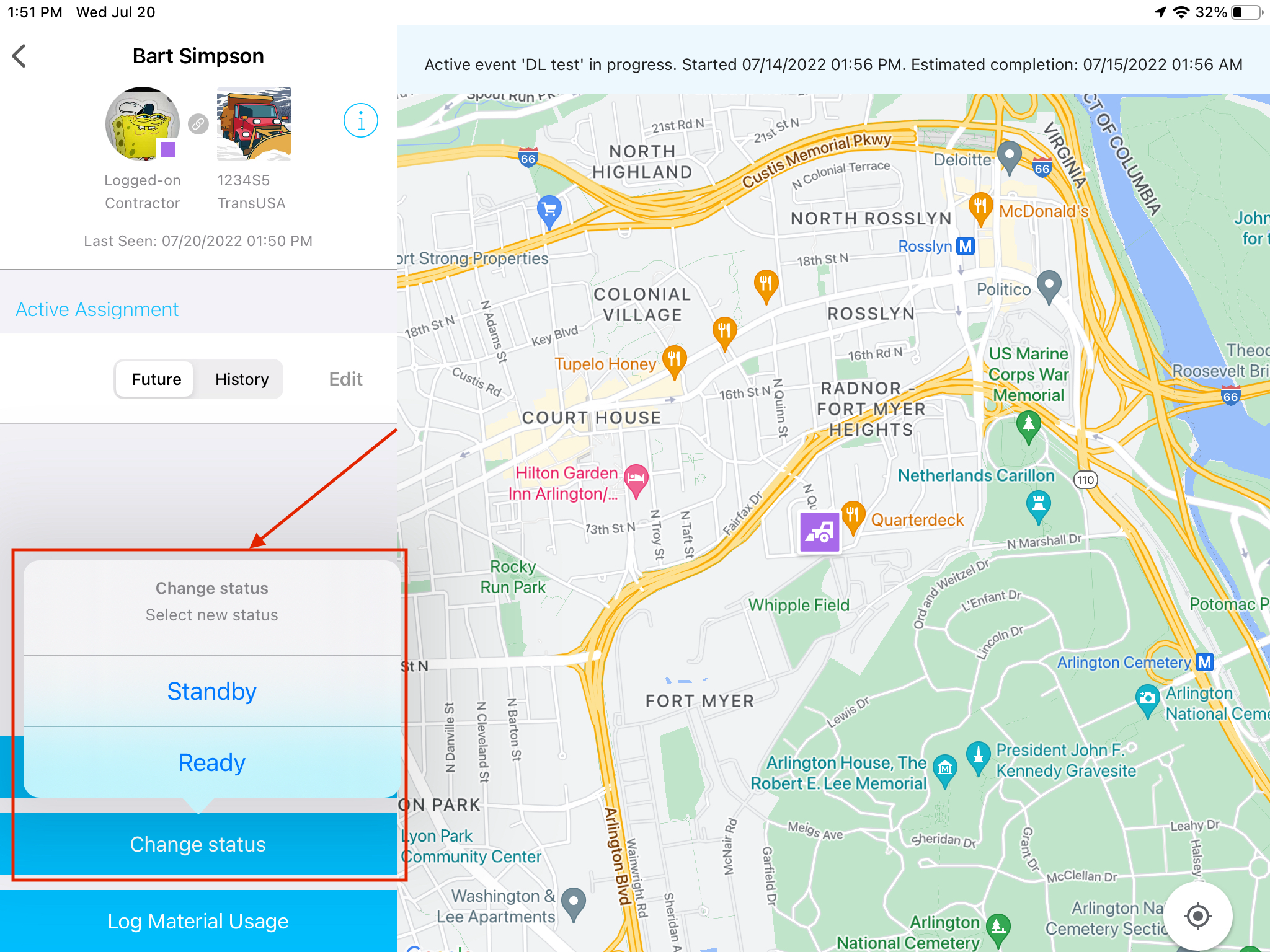
A Supervisor can manually change the status of a Contractor resource, for example from ‘Logged in’ to ‘Standby’ or ‘Ready’. Contractor status determines how payment is calculated (see Resource Service Statuses). To change a status:
- Open the Resource Details panel for the Contractor
- Select ‘Change status’
- Select the new status (Standby or Ready)
Assigning Resource to Tickets
A Supervisor can assign an existing ticket to a Resource, by doing the following:
- Navigate to the Tickets tab
- Select the ticket to assign
- On the ‘Ticket Details’ panel, select ‘Assign Resources’.
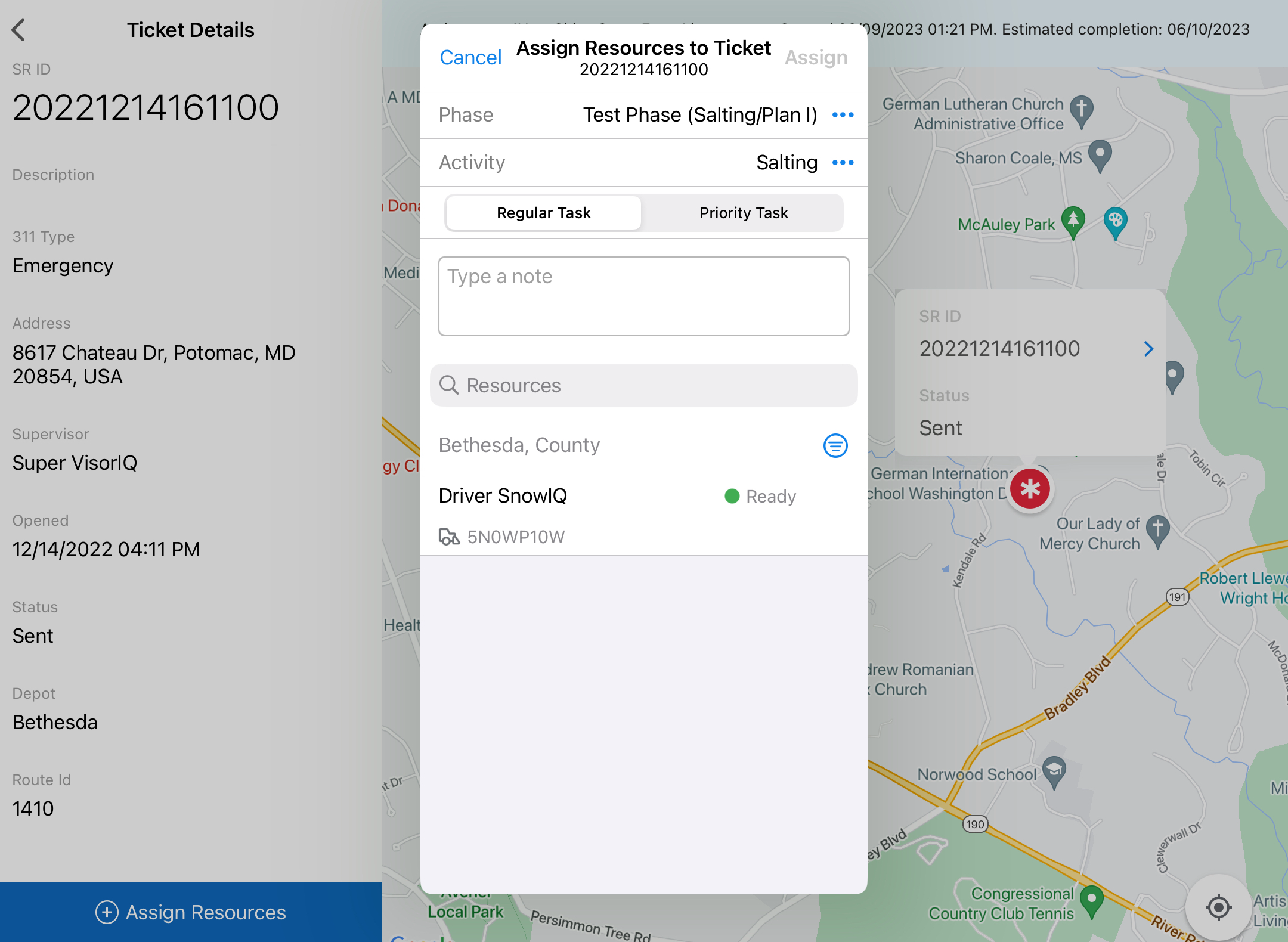
- In the ‘Assign Resource’ dialogue, do the following:
- Select type of Activity
- Specify whether it is a priority task using the Priority task toggle control. If selected, the assignment will be placed at the top of the queue of the Future list of assignments for the Driver.
- Enter a note to the driver
- Select a Resource by either searching for a Driver name in the search bar, or by selecting an available resource from the list which can be filtered by Depot (defaulted to the Supervisor’s Depot), and/or Resource Type (County or Contractor)
- Tap ‘Assign’
This will remove the ‘New’ tag from the ticket on the ticket list and change the color of the ticket marker on the map to yellow  to indicate that the ticket status is ‘Assigned’ but not yet accepted by the Driver. It will also notify the Driver to accept the ticket assignment.
Pausing or Resuming a Resource
A Supervisor may want to pause an assignment to document that no work is being performed on the route for a period of time. This may occur if a resource must refill salt or go to a gas station. Pausing an assignment ensures that off-route travel is not included in route information. When the Resource status is ‘In Service’, a Supervisor can pause an Active Assignment that a Driver has accepted or is working on, or resume it after it’s been paused by doing the following:
- From the Resource Details panel, select ‘Pause’ and then select ‘Yes’ on the verification prompt
- The system will change the resource’s status to ‘Paused’, and will notify the Driver in the Driver App that their Assignment has been paused and to wait for further instructions
- To resume the assignment, select ‘Resume’ on the paused Resource
Road Hazards
Creating Road Hazards
A Supervisor can create a road hazard on the map to warn Drivers of the hazards on their routes, by doing the following:
- From the Map Monitoring view (either tab: Routes, Resource, or Tickets), tap on the map where the road hazard is located
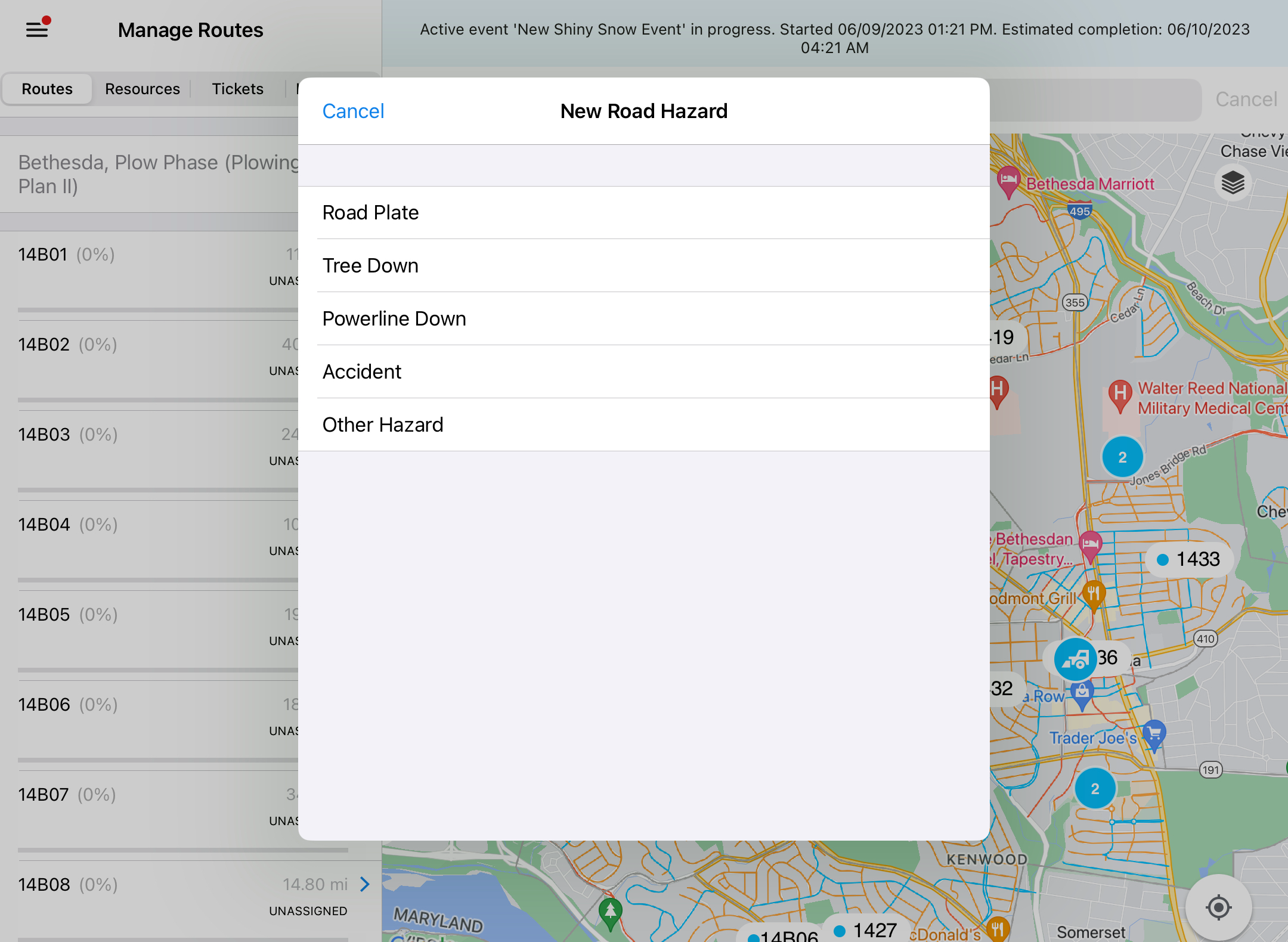
- The system will display the following ‘New road hazard’ prompt
- Select the type of road hazard and then select ‘Yes’ on the prompt to confirm the creation of a new road hazard
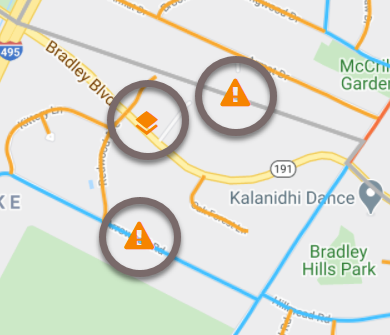
- The system will display hazards as either a road plate or a warning, as shown below.
- Road plates (orange stacked layers marker): A permanent hazard on the road
- Temporary hazard (orange warning triangle marker): A temporary road hazard such as a fallen tree, downed power line, or traffic accident Note: These hazards will appear on the map for all Supervisors and Drivers that are working in the same service area
Deleting Road Hazards
A Supervisor can delete an existing road hazard from the map if it doesn’t exist anymore by doing the following:
- Select a road hazard from the map
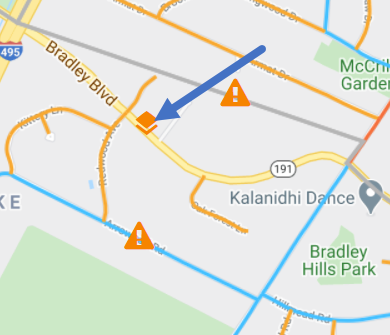
- The system will display the ‘Road hazard info’ prompt as shown
- Select ‘Delete’ and then select ‘Yes’ on the delete confirmation prompt
- Once deleted, the marker will no longer be displayed on the map